回家的诱惑
China-aid training alumni workshop focuses on boosting rice yields in Sri Lanka_我的网站

A | 부산도시철도 1호선 45편성 차량이 26일 관계자들의 박수를 받으며 노포차량기지로 들어오고 있다. 부산교통공사 제공“이 열차는 이번 운행을 끝으로 역사 속으로 사라집니다. 29년간 출퇴근과 일상을 함께해온 부산시민 여러분께 감사드리며, 여러분의 추억 속에서 오래 기억되기를 바랍니다.”이병진 부산교통공사 사장이 26일 오전 10시45분 부산도시철도 1호선 45편성 열차의 종착역인 노포역 도착 직전 안내 방송을 내보냈다.방송이 나오자 첫째 칸에 탑승한 승객들이 일제히 박수와 환호를 보냈다. “고마워” “고생했다” 격려의 말이 터져나오기도 했다. 누군가는 눈시울을 붉혔다. 부산도시철도 1호선 최후의 구형 전동차 ‘45편성’은 승객들의 뜨거운 환호 속에 마지막 영업운행을 무사히 마쳤다.45편성 전동차는 1997년 6월25일 상업운행을 시작해 29년 동안 부산 1호선을 달렸다. 운행 거리는 약 300만㎞, 지구를 75바퀴 돌 수 있는 거리다.운전은 1997년 같은 해에 입사한 구재민 기관사가 맡았다. 추첨을 통해 선발된 시민 10여명이 열차에 함께 올라탔다. 공사 관계자는 “신청자만 700명이 넘었다. 이렇게 반응이 뜨거울지 예상하지 못했다”며 “안전관리 때문에 참석자를 늘릴 순 없었다”고 말했다.45편성은 평소 속도의 절반 수준(시속 25㎞ 내외)으로 부산대역에 들어왔다. 열차 첫번째 객실은 전국에서 45편성의 마지막 운행을 보려는 철도·열차 마니아들로 가득 찼다.시민 임일란씨(30대)는 “어릴 적 범어사역 인근에 살면서 중고등학교와 대학교 때 매일같이 1호선을 이용했다”며 “그 추억이 생각나 지인들과 신청했는데 혼자 선정됐다. 1호선은 도심지를 달리는 야외구간이 있어 아들도 좋아한다”고 말했다.45편성의 퇴역으로 부산도시철도 1호선에서 구형 전동차는 완전히 사라진다. 다음달 1일부터 부산도시철도 1호선의 전동차는 모두 2017년 이후 도입한 것이다. 부산시와 부산교통공사는 2017년 1단계 40칸(5개 편성)을 시작으로 약 4300억원을 들여 구형 열차 교체 작업을 진행했다. 1호선을 다니는 전동차는 다대포선을 포함해 모두 51개 편성이다. 부산도시철도 2호선도 내년 5월부터 본격적인 구형 전동차 교체 사업이 진행된다. 2호선 전동차는 1999년부터 2002년까지 순차적으로 도입됐다.신형 차량은 객실 의자 폭이 450㎜로 구형 차량(430㎜)보다 넓다. 1량에 폐쇄회로(CC)TV를 2~3대 갖추고 있으며, 조명도 기존 삼파장 형광등이 아니라 LED가 설치된다.이병진 사장은 “45편성을 포함한 구형 전동차는 국내 최초 스테인리스 차체와 자동운전 시스템을 적용해 도시철도 기술 발전을 이끌어왔다”며 “많은 이들의 기억 속에 오래 남아 있으면 좋겠다”고 말했다.。
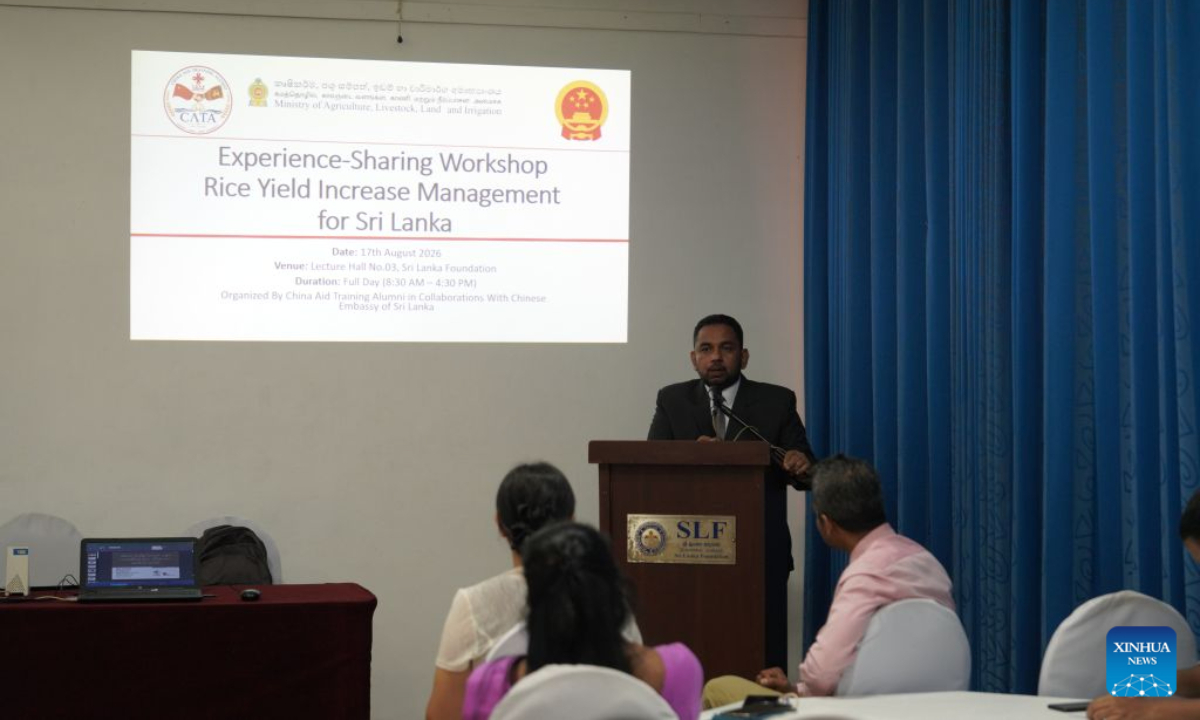
Sanjeewa Wimalagunarathna, president of CATA Sri Lanka, speaks during the first targeted experience-sharing workshop organized by China Aid Training Alumni (CATA) Sri Lanka held in Colombo, Sri Lanka, Aug. 17, 2026. The first targeted experience-sharing workshop organized by China Aid Training Alumni (CATA) Sri Lanka was held in Colombo on Monday, focusing on ways to increase rice yields and promote agricultural development in the country. (Xinhua/Chen Dongshu)The first targeted experience-sharing workshop organized by China Aid Training Alumni (CATA) Sri Lanka was held in Colombo on Monday, focusing on ways to increase rice yields and promote agricultural development in the country.
Organized by CATA Sri Lanka with support from the Chinese Embassy in Sri Lanka and Sri Lanka's Department of Agriculture, the workshop, themed "Rice Yield Increase Management for Sri Lanka," focused on high-yield rice varieties, seed technology, sustainable soil and water management, integrated pest and disease management, agricultural mechanization, post-harvest technologies, as well as policy and institutional support.
Sanjeewa Wimalagunarathna, president of CATA Sri Lanka, said in his welcome remarks that the event was the first experience-sharing workshop of its kind launched by the organization this year, describing the participating alumni as "pioneers" of the initiative.
He said the workshop would serve as a pilot for similar programs in the future and encouraged the alumni to provide frank and practical input based on both what they had learned during training in China and Sri Lanka's actual conditions, so that their experience and suggestions could be genuinely useful.
The representative of the Chinese Embassy in Sri Lanka said agriculture has long been an important area of practical cooperation between China and Sri Lanka.
She expressed hope that the alumni would make good use of the knowledge and experience they had gained in China and become a backbone force in Sri Lanka's agricultural development, while continuing to serve as ambassadors of friendship between the two countries, integrating their personal growth with national development and contributing to deeper bilateral cooperation.
During the workshop, Sri Lankan alumni shared techniques and practices they had learned in China in areas including high-yield varieties, water management, integrated pest management, mechanization and post-harvest technologies.
Participants were also divided into working groups to discuss seed technology and varietal improvement, sustainable soil and water management, integrated pest and disease management, mechanization and modern farming practices, post-harvest storage and marketing, as well as policy and institutional support.
Each group was tasked with developing a practical implementation roadmap containing specific recommendations, timelines, responsible institutions and required support. The roadmaps were then presented to relevant stakeholders for discussion and feedback, with a follow-up mechanism also envisaged by the organizers.
Rice is a staple food in Sri Lanka and plays an important role in the country's food security. Sri Lanka's annual paddy production reached about 5.05 million metric tons in 2025, up 7.6 percent from the previous year, according to the Central Bank of Sri Lanka.
China and Sri Lanka have continued to expand cooperation in human resources development and capacity building in recent years. China has organized aid-funded training programs for Sri Lankan participants from government departments, research institutions, business associations and enterprises.
According to the Chinese Embassy in Sri Lanka, nearly 14,000 Sri Lankan political and business representatives have participated in China-aid training programs in China over the years. In 2025 alone, approximately 1,000 Sri Lankan trainees participated in nearly 100 training programs, including 19 bilateral programs tailored to Sri Lanka's specific needs.
。
Current article:http://67zud.qiniaohongfangfoguisenzhai.cyou/ufc5/20260826/618652.html
Published on:00:21:11
